
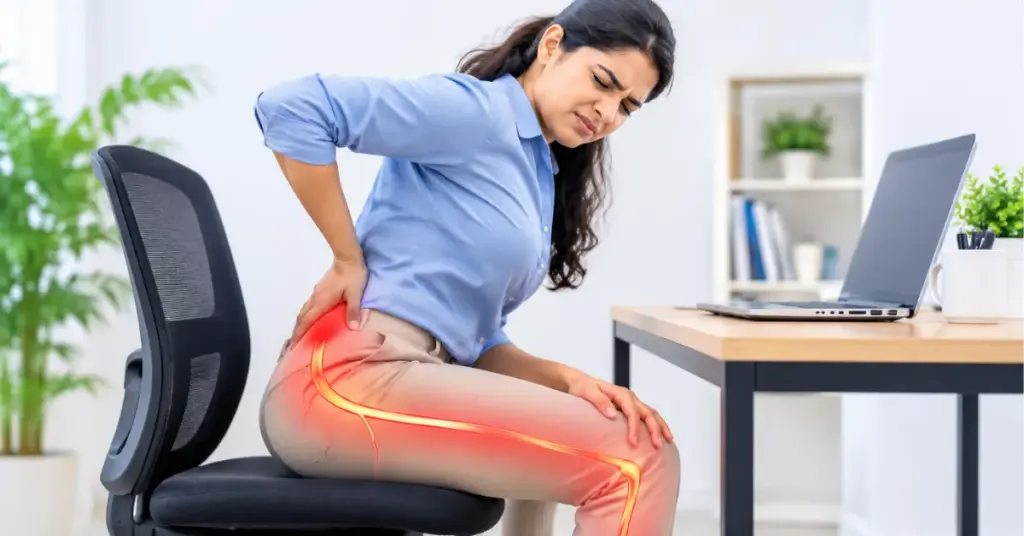
Sitting for long hours at a desk, driving, or working on a computer can sometimes trigger discomfort in the lower back and legs. When this discomfort travels from the lower back through the buttocks and down one leg, it may be related to sciatica.
Sciatica occurs when the sciatic nerve becomes irritated or compressed. This nerve travels from the lower back through the hips and down each leg. Depending on the underlying cause, the pain may feel sharp, burning, electric, or like a continuous pulling sensation.
Why Does Sitting Increase Sciatic Pain?
Several factors can make sciatica symptoms more noticeable after prolonged sitting.
1. Increased Pressure on the Lower Back
Sitting for extended periods, particularly with poor posture, can increase pressure on spinal structures. In some individuals, this may aggravate an already irritated nerve.
2. Limited Movement
Remaining in one position for hours can increase stiffness around the lower back and hips. Reduced movement may also make existing discomfort more noticeable when standing up.
3. Underlying Disc Problems
A bulging or herniated disc may irritate nearby nerve roots. Certain sitting positions can aggravate symptoms in people with these conditions.
Other Symptoms Associated With Sciatica
Sciatica does not always cause the same symptoms in everyone. Common complaints include:
- Pain travelling from the lower back into one leg.
- Tingling or a pins-and-needles sensation.
- Numbness in the leg or foot.
- Muscle weakness in some cases.
- Increased discomfort while sitting, bending, or coughing.
Sudden leg weakness, numbness around the groin, or difficulty controlling bladder or bowel movements requires emergency medical evaluation.
How Can Sciatica Be Evaluated?
Diagnosis begins with understanding the patient’s symptoms, medical history, and physical examination. A doctor may assess leg strength, reflexes, walking patterns, and nerve-related symptoms.
MRI or other investigations may be recommended when clinically necessary.
What Treatment Options May Be Considered?
Treatment depends on the cause and severity of nerve irritation. Options may include medication, activity modification, physiotherapy, and selected interventional procedures.
Epidural injections or other image-guided procedures may be considered for suitable patients who continue experiencing symptoms despite conservative treatment.
When Should You Consult a Pain Specialist?
Persistent leg pain should not be ignored, especially when it affects walking, sleeping, or routine activities. A consultation can help identify the underlying problem and determine an appropriate treatment approach.
Patients experiencing persistent nerve-related discomfort can consult Dr. Ritu Pauranik for Sciatica Treatment in Indore, where treatment recommendations are based on individual symptoms, examination findings, and diagnostic requirements.
FAQs
1. Can sitting for long hours cause sciatica?
Prolonged sitting may aggravate existing sciatica symptoms, although it is not the only cause of the condition.
2. Does sciatica affect both legs?
Sciatica commonly affects one leg, but symptoms can occasionally involve both legs depending on the underlying spinal condition.
3. Is walking helpful for sciatica?
Gentle walking may help some people maintain mobility. However, activities should be adjusted according to pain severity and medical advice.
4. Can sciatica improve without surgery?
Many patients improve with conservative treatment. Some may require additional interventions depending on the cause and severity.
5. When should I see a pain specialist for sciatica?
Consult a specialist if pain persists, repeatedly returns, or interferes with daily activities.