
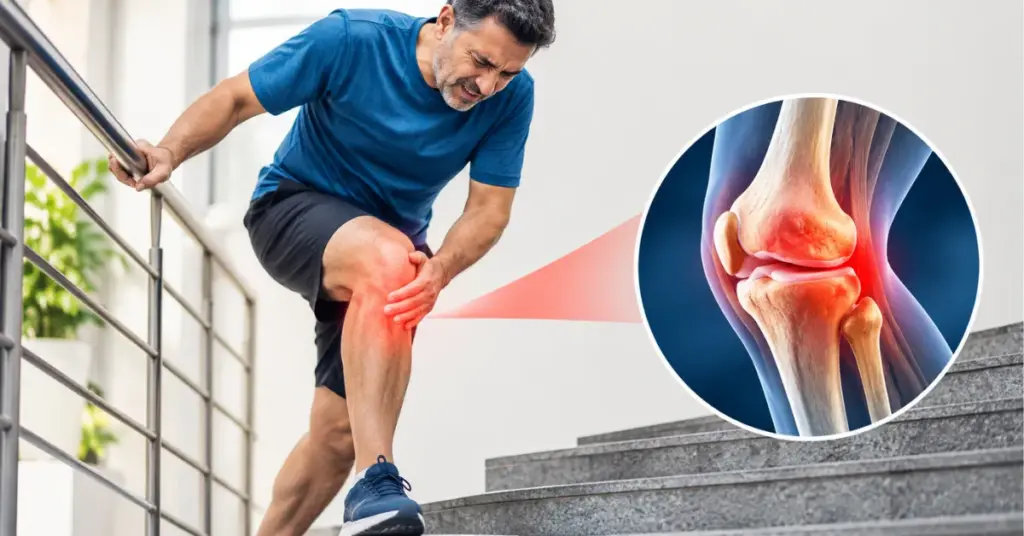
Climbing stairs is a routine daily activity, but it can become uncomfortable when knee pain develops. Some people experience discomfort while climbing upwards, while others find coming downstairs more painful.
The knee joint carries a significant portion of body weight during movement. Activities such as stair climbing require repeated bending and straightening of the knee, which can increase stress on certain joint structures.
Occasional discomfort may result from temporary strain. However, recurring pain may indicate an underlying joint or soft tissue problem.
Common Reasons For Knee Pain On Stairs
1. Osteoarthritis
Osteoarthritis involves gradual changes in joint cartilage and surrounding structures. It can cause pain, stiffness, swelling, and reduced mobility.
People with knee osteoarthritis may notice increased discomfort during stair climbing, prolonged walking, or standing.
2. Patellofemoral Pain
The patella, commonly called the kneecap, moves along a groove in the thigh bone during knee movement.
Problems involving this joint area can cause pain around or behind the kneecap, particularly during activities that involve bending the knee.
3. Muscle Weakness
Weakness in the muscles supporting the knee and hip may affect joint movement and stability. This can contribute to discomfort during weight-bearing activities.
4. Previous Knee Injuries
Old ligament, meniscus, or cartilage injuries may contribute to recurring knee discomfort, especially when the joint is placed under additional stress.
Symptoms That May Accompany Knee Pain
Apart from pain while climbing stairs, patients may experience:
- Stiffness after sitting for a long time.
- Swelling around the knee.
- Difficulty bending or straightening the leg.
- Pain after prolonged walking.
- A feeling of instability.
- Reduced ability to participate in physical activities.
A suddenly swollen, hot, or severely painful knee, particularly with fever, needs urgent medical assessment.
How Is the Cause Identified?
A proper evaluation includes understanding the patient’s symptoms, previous injuries, activity levels, and medical history.
The doctor may examine knee movement, joint tenderness, muscle strength, and stability. X-rays or MRI may be recommended when required.
What Treatment Options Are Available?
Treatment depends on the underlying diagnosis.
Conservative approaches may include activity modification, appropriate exercises, physiotherapy, and prescribed medication.
For selected patients with persistent knee pain, image-guided injections or radiofrequency procedures may be considered after evaluation.
Cooled radiofrequency ablation is one of the interventional options used in selected cases of chronic knee pain, particularly when pain signals from the nerves around the joint contribute to symptoms.
When Should You Consult A Specialist?
Persistent knee pain should not become a reason to avoid walking or routine activities without understanding its cause.
An experienced specialist can evaluate the condition and discuss appropriate options. Patients seeking Knee Pain Treatment in Indore can consult Dr. Ritu Pauranik for an individualized pain management assessment.
FAQs
1. Why does my knee hurt more while climbing stairs?
Stair climbing places additional demands on the knee joint and surrounding muscles. Arthritis and patellofemoral problems are possible causes.
2. Is knee pain always a sign of arthritis?
No. Muscle weakness, injuries, tendon problems, and kneecap-related conditions can also cause knee pain.
3. Can walking make knee pain worse?
It depends on the underlying condition, walking duration, and intensity. Activity modification may be necessary.
4. Is surgery the only option for chronic knee pain?
No. Depending on the diagnosis, medication, physiotherapy, injections, and selected interventional procedures may also be considered.
5. When should I consult a knee pain specialist?
Consult a specialist when pain persists, swelling develops, or knee discomfort interferes with walking and daily activities.