
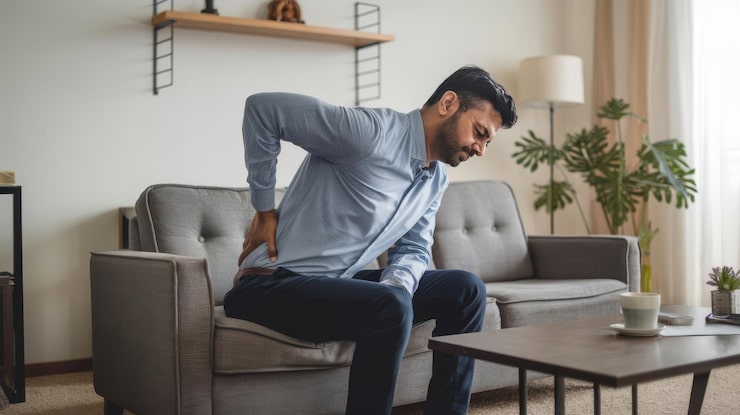
What Is Sciatica?
Sciatica refers to pain that radiates along the path of the sciatic nerve — the longest nerve in the body, running from the lower back, through the hips and buttocks, and down each leg. Unlike ordinary back pain, sciatica is characterized by a shooting, burning, or electric-shock-like sensation that travels down one leg, often accompanied by numbness or tingling.
At Pauranik Healthcare Centre in Indore, Dr. Ritu Pauranik regularly treats patients with sciatica using a combination of accurate diagnosis and targeted interventional pain management techniques, helping them avoid unnecessary surgery in many cases.
Common Causes of Sciatica
Sciatica occurs when the sciatic nerve or its nerve roots become irritated or compressed. Common causes include:
- Herniated or slipped disc — the most common cause, where disc material presses on a nerve root
- Spinal stenosis — narrowing of the spinal canal that puts pressure on nerves
- Degenerative disc disease — age-related wear and tear of the spinal discs
- Spondylolisthesis — when one vertebra slips forward over another
- Piriformis syndrome — when a muscle in the buttock irritates the sciatic nerve
- Pregnancy-related changes — due to weight gain and postural shifts
Recognizing the Symptoms
Sciatica symptoms can vary from mild discomfort to severe, debilitating pain. Typical signs include:
- Sharp, shooting pain that radiates from the lower back into the buttock and down the leg
- Pain that worsens with sitting, bending, coughing, or sneezing
- Numbness, tingling, or a “pins and needles” sensation in the leg or foot
- Muscle weakness in the affected leg
- Pain that is usually one-sided, affecting only one leg at a time
In rare cases, sciatica can be accompanied by loss of bladder or bowel control — a medical emergency that requires immediate attention.
How Is Sciatica Diagnosed?
Diagnosis begins with a detailed history and a thorough physical examination, including tests that check reflexes, muscle strength, and the specific pattern of pain radiation. Dr. Pauranik may also recommend imaging studies such as an MRI or X-ray to identify the exact cause of nerve compression, especially if symptoms are severe, persistent, or associated with weakness.
Treatment Options for Sciatica
The good news is that most cases of sciatica improve with conservative and minimally invasive treatments, without the need for major surgery. Treatment options at Pauranik Healthcare Centre include:
- Medication management — to reduce inflammation and nerve-related pain
- Physiotherapy and targeted exercises — to relieve pressure on the nerve and strengthen supporting muscles
- Epidural steroid injections — delivering anti-inflammatory medication directly to the area around the irritated nerve root
- Transforaminal injections — precisely targeting the affected nerve root under fluoroscopic guidance
- Selective nerve root blocks — for both diagnostic and therapeutic purposes
- Radiofrequency ablation — for select cases of chronic nerve-related pain
These procedures are performed using fluoroscopic (X-ray) guidance to ensure precise needle placement, maximizing both safety and effectiveness.
When Should You See a Specialist?
While mild sciatica often improves on its own within a few weeks, you should consult a pain specialist if:
- Pain persists for more than 2-3 weeks despite rest and home care
- Pain is severe enough to interfere with walking, sitting, or sleeping
- You notice numbness, tingling, or weakness in the leg or foot
- The pain keeps recurring despite previous treatment
Early evaluation allows for a more accurate diagnosis and a treatment plan tailored to the specific cause of nerve irritation, rather than just masking the symptoms.
Tips to Prevent Sciatica Flare-Ups
- Maintain good posture while sitting and standing
- Avoid prolonged sitting — take regular breaks to stand and stretch
- Use proper lifting techniques — bend at the knees, not the waist
- Stay physically active with low-impact exercises like walking and swimming
- Maintain a healthy body weight to reduce strain on the spine
Find Relief from Sciatica in Indore
If you’re experiencing radiating leg pain, numbness, or tingling, don’t wait for it to worsen. Dr. Ritu Pauranik at Pauranik Healthcare Centre, Indore, offers comprehensive, evidence-based evaluation and treatment for sciatica using the latest interventional pain management techniques.
???? Call us at +91 70679 18785 / +91 95756 46975
✉️ Email: dr.rituaga@gmail.com
???? Visit us at: 4, Ahilyapuri, Near Residency Club, Zoo Road, Residency Area, Indore, MP – 452001
[Book Appointment] | [Schedule Consultation]
n
Sciatica vs. General Back Pain: Knowing the Difference
n
Not all back pain is sciatica, and the distinction matters because the treatment approach can differ significantly. General lower back pain is typically felt as a dull ache or stiffness localized to the back itself, often related to muscle strain or poor posture. Sciatica, on the other hand, is specifically nerve-related — it follows the path of the sciatic nerve and is felt as a sharp, radiating pain that travels from the lower back or buttock down the back of the thigh, sometimes reaching as far as the calf or foot.
n
If your pain stays confined to your lower back, it may simply be a muscular or mechanical issue. However, if you notice pain, numbness, or tingling extending down one leg, this is a strong indicator that a nerve root is involved — and this distinction helps Dr. Pauranik tailor the most appropriate diagnostic and treatment approach for you.
nn
The Role of Lifestyle in Long-Term Sciatica Management
n
While interventional procedures can provide significant relief, long-term management of sciatica often benefits from complementary lifestyle changes. Patients who combine medical treatment with consistent core-strengthening exercises, ergonomic adjustments at work, and mindful movement patterns tend to experience fewer recurrences. Dr. Pauranik often works alongside physiotherapists to design a maintenance plan that helps patients stay pain-free for longer after their initial treatment.
n
For office workers in particular, simple changes such as using a chair with proper lumbar support, positioning the computer screen at eye level, and standing up every 30-45 minutes can make a meaningful difference in preventing sciatica flare-ups.